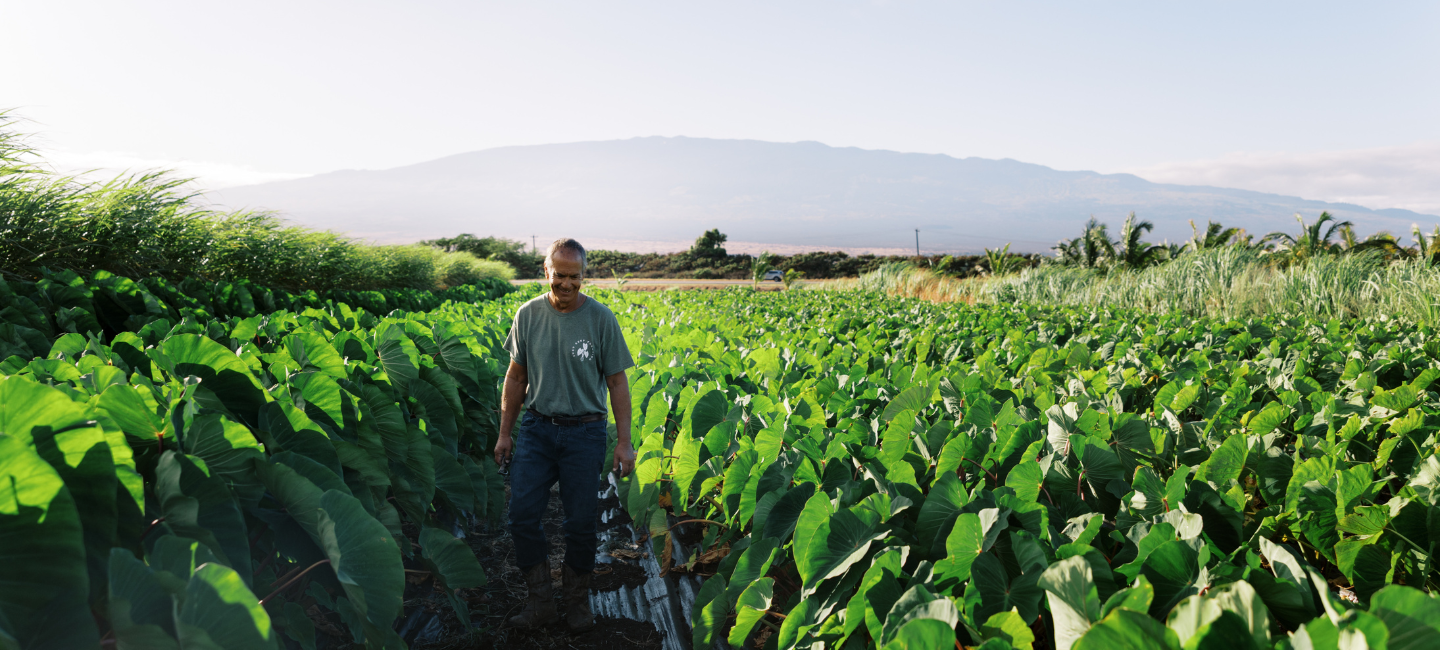

Herbaceous wind barriers consist of herbaceous vegetation established in narrow strips within the field to reduce wind speed and wind erosion.
This video explores how Bobby Pahia implemented this conservation practice in Waikapu, Hawai'i. Practice benefits:
- Reduces erosion
- Improves plant health
- Reduces crop wind damage
- Improves air quality
Regenerative/Hybrid Farming
L Regenerative agriculture is a farming and ranching philosophy that aims to improve the health of soil, water, and biodiversity while also supporting the local community. Regenerative agriculture is designed to work in harmony with nature while also maintaining economic viability
- Soil: Health Regenerative agriculture focuses on improving soil health and biological life.
- Biodiversity: Regenerative agriculture can increase biodiversity by supporting functioning ecosystems where wildlife can thrive.
- Community: Regenerative agriculture can support thriving rural communities and create opportunities for people of all backgrounds.
- Food: Regenerative agriculture can produce nutrient-dense food
- Livestock: Can help regenerative agriculture in many ways, including improving soil health, increasing organic matter, increase microbial density, and protecting soil structure.
